Reviewed by Amber Atlee
Two water softener quotes for the same house can leave you scratching your head. The equipment looks similar, both companies say it will soften your water, and yet the prices are quite different.
What are you actually getting for the difference?
Water softener cost comes down to several things: what’s inside the system, how it operates, how it’s matched to your home, who installs it, and what the warranty covers. There’s also what you’ll spend on salt, water, maintenance, and repairs over the years.
Looking at those pieces together gives you a much clearer picture than comparing the purchase prices alone.
Why can similar-looking softeners cost so differently?
Most of the important differences aren’t visible from the outside.
Inside a softener are tiny beads called resin that remove the minerals that make water hard. Resin comes in different types and grades. Its quality, how much is used, and how well it suits your water can affect performance and how it holds up over time.
For example, chlorine exposure can gradually damage resin, while iron can build up on it and interfere with its ability to soften water. The resin selected, and any treatment needed to protect it, belong in the recommendation.
The valve that controls the system matters, too. Its construction, how it manages regeneration, and whether it can be repaired all contribute to what you’re buying.
You don’t need to learn the names of every component. You should be able to ask what makes the proposed equipment different and get an answer that connects those differences to your home.
How does sizing affect the recommendation?
A softener needs to keep up with both your water conditions and your household.
How hard is your water? How much do you use? Are two showers and the washing machine often running at the same time?
Those answers help determine the appropriate equipment and settings. A system that struggles to keep up can leave you disappointed, while buying extra capacity you don’t need doesn’t automatically improve your water.
That’s why a water test and a conversation about your household are useful starting points. The number of bathrooms tells only part of the story.
How does the way it operates affect your cost?
Every salt-based softener needs to periodically clean the hardness minerals off its resin so it can keep working. This is called regeneration, and it uses salt and water.
How the system decides when to regenerate, and how much it uses each time, affect its ongoing operating cost.
Some electric softeners regenerate on a set schedule. Others measure your water use and schedule regeneration based on how much softening capacity has been used. Those are different approaches, even though both systems plug into an outlet.
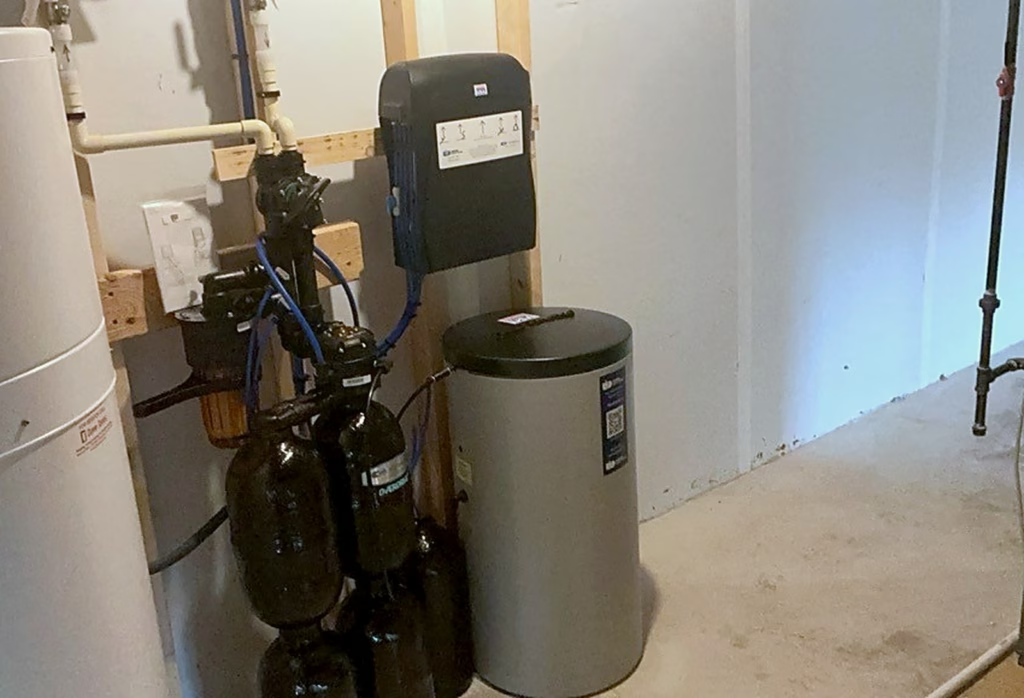
Kinetico non-electric twin-tank softeners measure water use and can regenerate when needed while another tank continues supplying soft water. Models such as the Premier XP S250 also use softened water to clean the resin and can be adjusted to the home’s water conditions to help use salt and water efficiently.
The useful comparison is how much salt and water each specific system needs to serve the same household. That tells you more than a general promise that a system is efficient.
What does a second softening tank do?
A typical single-tank softener can’t soften incoming water while it regenerates. Many electric models schedule this overnight, when you’re less likely to need water.
If you do use water during that time, it may be hard water.
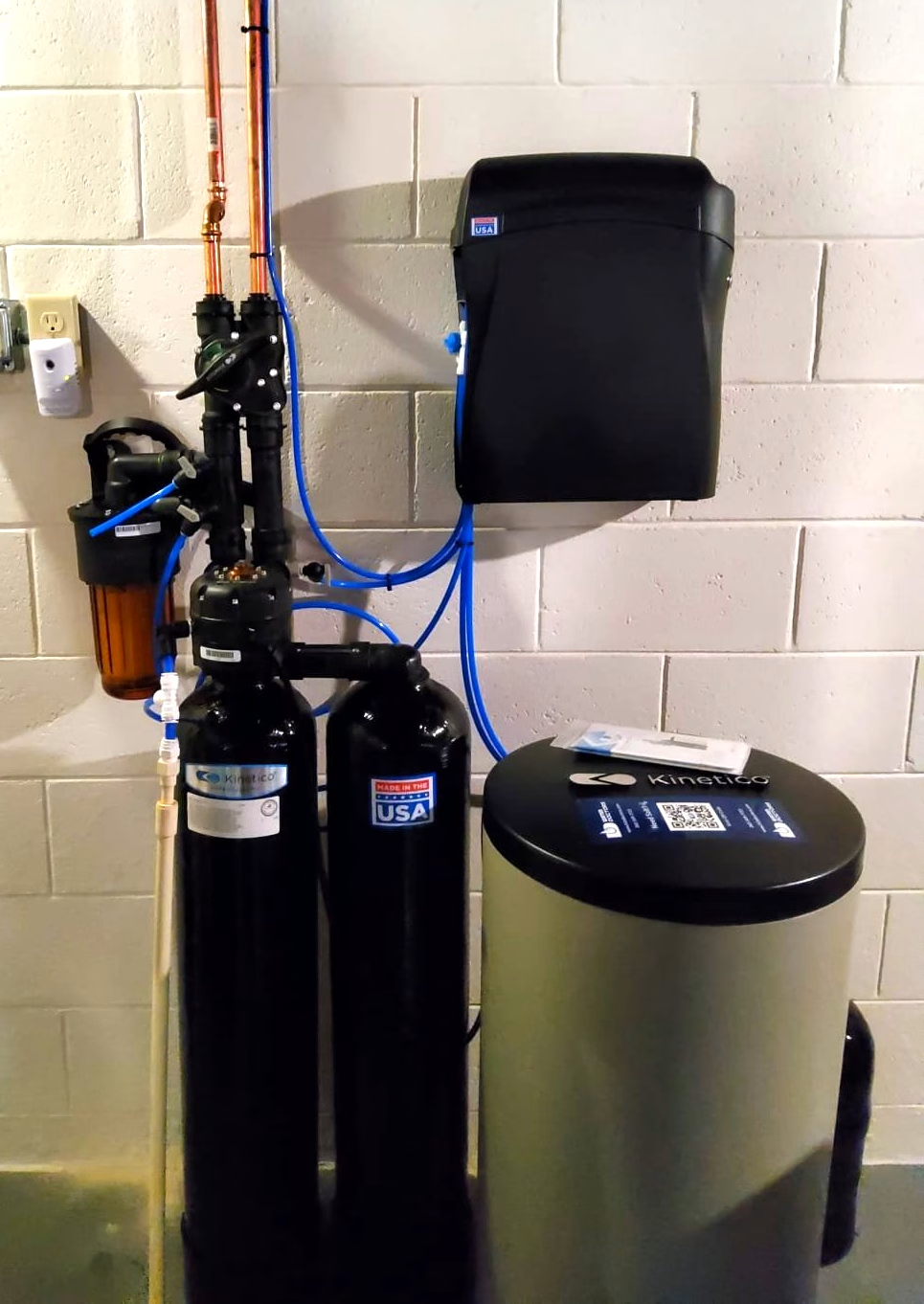
A Kinetico non-electric twin-tank system has another softening tank available. When one regenerates, the other supplies soft water.
That can be helpful if someone works a different shift, you start laundry late, or your household’s water use changes from one day to the next. The system can regenerate when needed while keeping soft water available.
One detail that can be confusing: the salt tank doesn’t count as a second softening tank. A single softening tank beside a salt tank is still a single-tank system.
Could a softener that costs more upfront cost less over time?
Yes, it can. The purchase price is the beginning of the ownership cost.
A system that uses less salt and regeneration water can reduce ongoing expenses. Durable components and the ability to repair the equipment can also affect what you spend over its life.
Think about buying salt year after year. A difference in how much you use means a difference in what you spend, along with how often you haul bags into the basement. Maintenance, repairs, and eventually replacing equipment belong in that picture, too.
Whether those savings outweigh a higher purchase price depends on the models, your water, how much you use, and how long you own the system. It shouldn’t require a guess. Ask how the proposed options compare in expected salt use, regeneration water, and recommended maintenance.
Why does installation change the price?
A water softener becomes part of your home’s plumbing. Its connections, drain, bypass valve, and settings all need attention.
Some homes already have a suitable setup. Others need plumbing changes or a different equipment location. Those differences affect the work involved.
Who does that work matters as well. At Water Doctors, our plumbers install and service water treatment equipment, bringing knowledge of both the plumbing and the system being connected to it.
When comparing estimates, ask who will perform the installation and what’s included, from plumbing changes to removing the old equipment and explaining how to use the new system.
What should you know about the warranty?
Start with what is covered, then look at how long that coverage lasts.
The tank, working parts, and resin may have different warranty terms. Labor may have separate coverage or may not be included in the manufacturer’s warranty at all.
A covered replacement part, for example, doesn’t necessarily mean the work to diagnose the problem and install it is covered.
Also ask who handles the claim and services the equipment locally. Knowing who to call and what to expect is part of understanding the purchase.
How do you compare water softener quotes?
Put the proposals side by side and look at the same details for each one:
| What to compare | What to ask |
|---|---|
| Equipment and materials | What’s inside the system, and why is it suited to my water? |
| Sizing | How does this model fit my water conditions and household use? |
| Operation | When does it regenerate, and is soft water available during that process? |
| Ongoing cost | What salt use, regeneration water, and maintenance should I expect? |
| Installation | Who does the work, and what is included? |
| Warranty and service | What parts and labor are covered, and who helps me later? |
You should come away understanding what the differences will mean in everyday use, as well as what they may mean for your future expenses.
Understanding what you’re bringing home
Most people want reliable soft water without having to think about the equipment very often. Choosing a system involves looking at how well it’s built, how it operates, and how it will be supported over time.
At Water Doctors, we start with your water and your household’s needs. Then we help you understand the options, including the differences you can see and the ones working quietly inside the tank. You can see our water softener options here.
If you’re comparing water softeners for your Southeast Wisconsin home, we’re happy to help you make sense of the details so you can choose with confidence.
Common questions
The appropriate equipment and installation depend on your water, household use, and existing plumbing. An in-home assessment allows us to recommend a system and explain the cost for your particular project.
No. Softening resin comes in different types and grades. What matters is how it performs in the proposed system and how well it suits your water conditions.
Ask for expected salt use, water used during regeneration, and maintenance requirements for the specific models. Compare them using the same water hardness and household water use. Fewer regenerations alone do not establish lower operating cost.